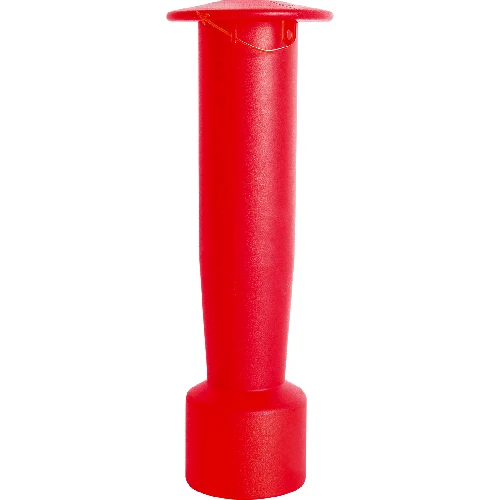
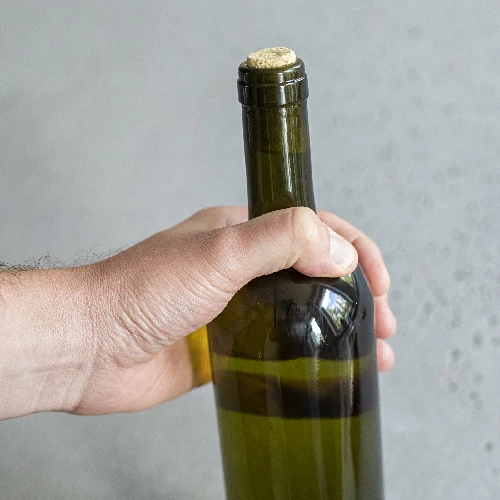
It is hard to evaluate which stage of the home production of liquor provides the most pleasure: corking the bottles or opening them. The beautiful shape of the bottles, decorated with a dignified cork makes even looking at them a great deal of fun already. Have you ever used a manual corker? It has a lot of advantages.
- Base made of ultra durable plastic. You do not need to worry about damaging it while working.
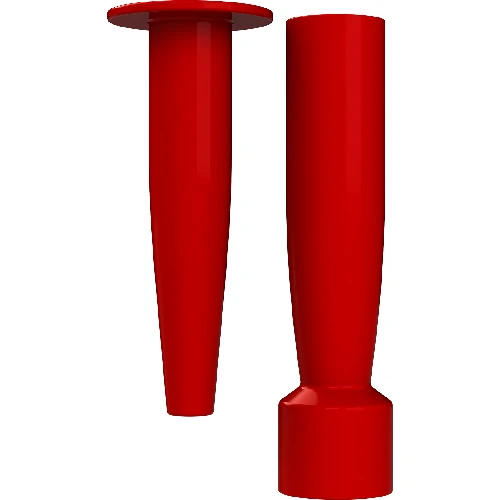
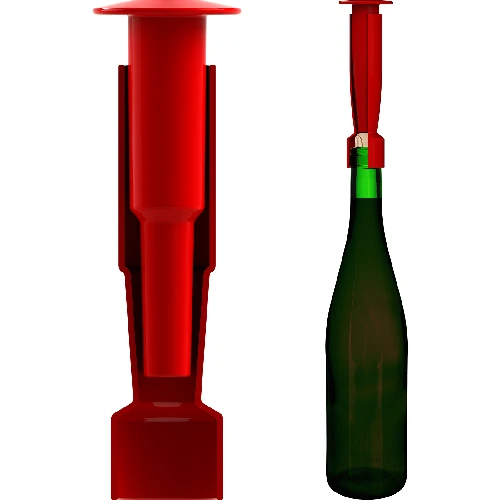
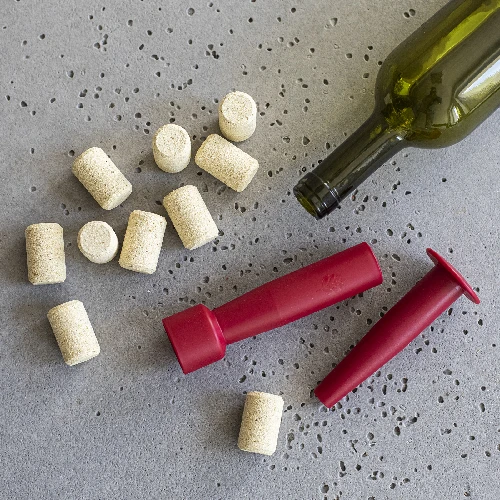
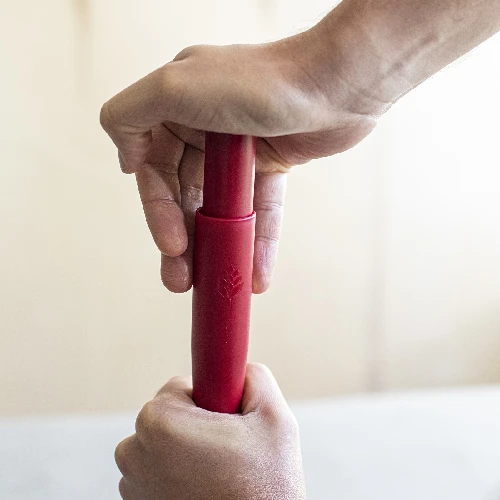
- Easy to use - the corking is done in quite a simple way – it relies on using a tapering cone sleeve with a piston.
- Full control over the entire process - the piston in corkers of this type is pushed manually or using a rubber hammer (which is why this group of corkers is often referred to as “hammer corkers”).
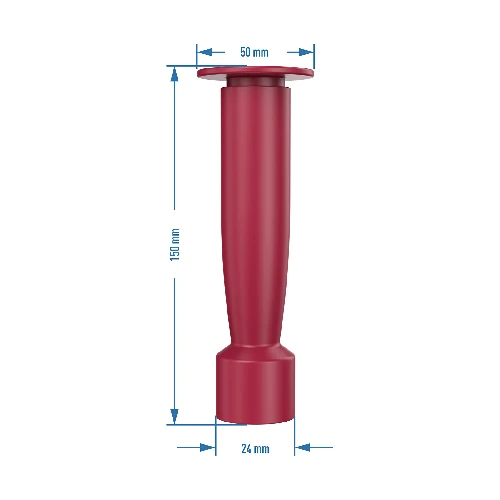
- Lightweight and handy - this device weighs only 56.0 g.
- Very versatile - intended for use with cylindrical corks with maximum diameter of up to 22 mm, and with conical corks with maximum top diameter of 23 mm.
Bottle corking is a very important stage in producing e.g., homemade wine. Its bouquet and flavour do not depend only on the fermentation conducted, but also - to a great extent - on the quality of corks and the method employed for corking bottles.
PREPARATION OF CORKS
Natural corks (solid, agglomerated, layered) and synthetic corks come in different shapes (cylindrical, conical) and forms (e.g., mushroom-shaped corks and decorative corks). Synthetic corks come ready to use, while the natural ones need to be prepared properly prior to commencing corking.
- NATURAL CONICAL CORKS
They are used for corking wines that are intended for consumption in short-term and not intended for long-term aging. The contact surface between these corks and bottle necks is too little to ensure long-term securing of wine. It is not necessary to use a corker – the corks can be pushed inside manually. - NATURAL CYLYNDRICAL CORKS (AGGLOMERATED, SOLID)
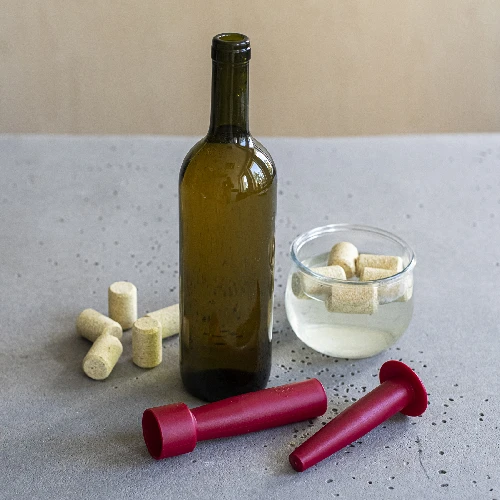
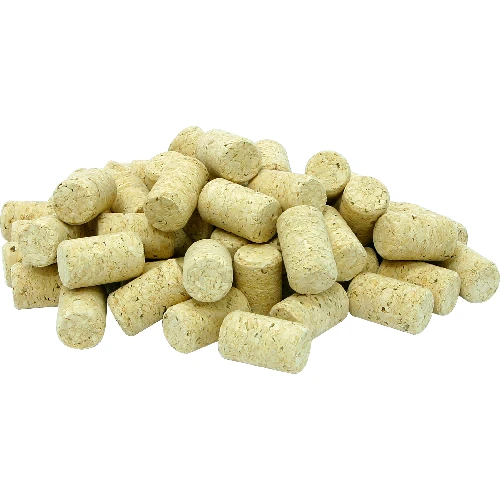
In home conditions, it is enough to immerse the corks of this type for about 5 minutes in hot water or place them over boiling water under some cover. This will make them sterilised and more flexible, facilitating bottle corking. Remember not to “moisten” the corks for too long, as it may lead to damaging them. - SYNTHETIC CYLINDRICAL CORKS
They do not require any special preparation and can be disinfected through scalding or washing in potassium metabisulphite. Suitable mainly for young wines. It is recommended to replace the corks of this type once in two years.
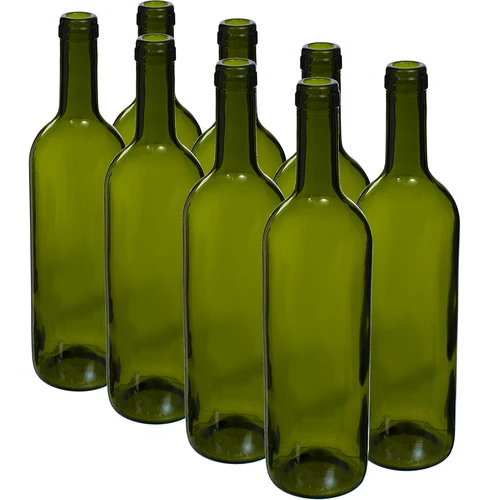
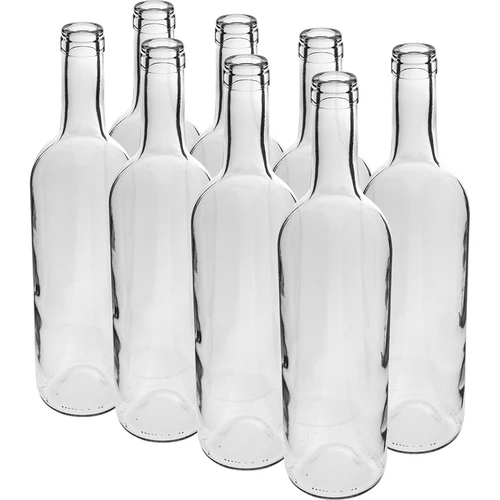
CORKING PROCESSIn order to avoid contaminations of any kind, prior to corking the bottles it is necessary to wash them thoroughly with a bottle cleaning brush and dishwashing liquid and then flush them well. If we want to be 100% sure that the bottles are clean, we can sterilise them by boiling them in water with temperature of 80⁰C for about 10 minutes or by flushing them with a potassium metabisulphite solution.
When filling bottles it is necessary to pay particular attention to the wine becoming aerated as little as possible. This will be facilitated by using a hose for siphoning wine and a funnel. It is also necessary to remember to leave about 4-5 cm of empty space below the bottle neck edge.
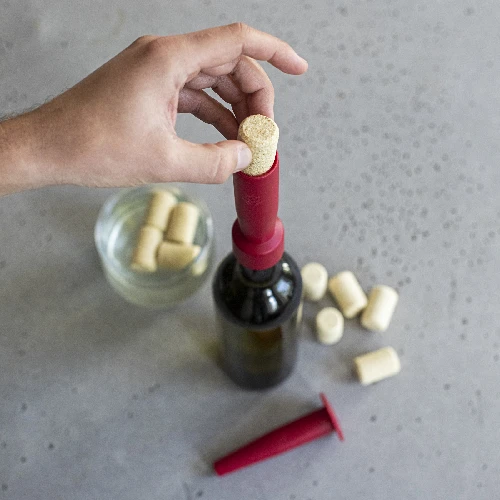
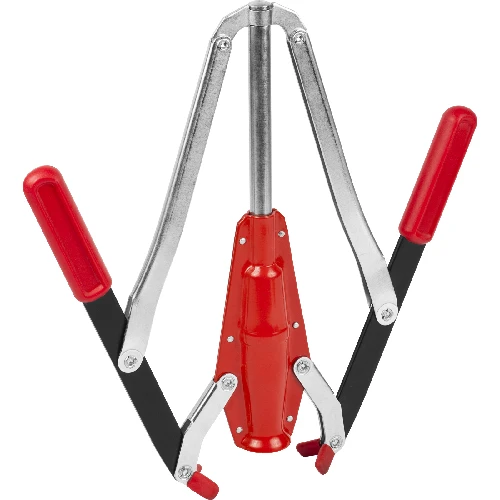
Conical corks are placed on the bottle neck and then pushed inside or using a corker (chosen from among the models available).Cylindrical corks are placed in bottles after prior preparation and require using a corker. In the event of it being necessary to cork not more than 30 bottles, it is enough to use the simplest manual corker in the form of a sleeve. If there are more bottles to cork, the most useful will be 2-arm or 3-arm corkers that requires using less force and increasing corking rate.After corking the bottles should remain in vertical position for one day. This will allow the cork to adjust to the inner wall of the bottle neck. Next, it is necessary to place the bottles horizontally, which, in turn, prevents the cork from drying (the wine “washes” the cork) and ensures proper gas exchange between the inside of the bottle and the surroundings. After two or three days it is necessary to check whether the corks are not leaking. If any leak appears, it is necessary to replace the cork with a new one.
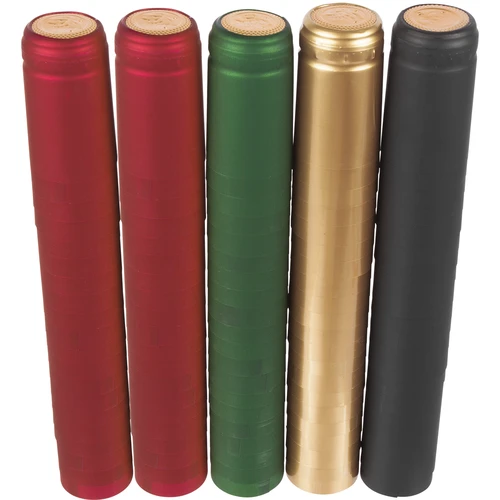
The bottle corking process if finished by putting heat shrink caps. There are several ways of shrinking the caps on bottle necks. One of them is applying a special device (a professional shrinker) or use one of the household methods:immersing the bottle neck together with the cap applied in a vessel with hot water (caution – using boiling-hot water may damage the cap!);placing the bottle neck with the cap applied over a stream of hot steam released from e.g. a kettle;heating a standing bottle with the cap applied with and hairdryer from all sides until the cap fits tightly to the bottle neck.The application of a coloured cap improves the look of the bottle and protects the corks, thanks to which the wine can be aged for longer. It is also worth using adhesive labels intended for bottles, enabling to write the wine type, vintage year and any other useful information.
WINE STORAGE / AGING
- Wine bottles, corked tight and featuring an informative label, should be stored in a dry room with limited access of light and in temperature of 10-15°C.
- It is best when the bottles are aged on racks specially intended for that purpose.
- Each type of wine required appropriate conditions. Red wines age best in a temperature of 15-18°C, white - in 10-15°C, and rosé - in 9-10°C. The lowest temperature is required by sparkling wines: 6-9°C. In a wine cellar, the optimal air humidity should be 65-80%. Too low humidity results in shrinking of bottle corks and ingress of air into the bottles. This, in turns, alters the flavour of wine or even leads to spoilage of it. On the other hand, excess humidity may lead to appearance of e.g. mould.
- What may be helpful in maintaining the optimal wine temperature is the method of arranging the bottles, which is why it is recommended to place white and rosé wines the lowest, and the temperature near the floor is lower than near the ceiling. The bottles should lie in such a way that makes the wine moisten the corks – thanks to that they will swell, thus sealing the bottles. During storage, further transformations constituting the wine aging process will be taking place.
Thanks to our manual corker, corking is pure pleasure! Try it out today!
Please note! The corkers of this type are not suitable for corking bottles that have their necks flipped outwards.





 Cheese calculator



 Winemaking









![Wine hand corker for max Ø24mm corks ['"double lever corker', ' wine corker', ' bottle corker', ' wine corker castorama', ' hand corker', ' wine corker leroy merlin', ' wine corker allegro', ' bottle corker castorama', ' wine corker olx', ' champagne corker', ' hammer corker', ' corkers\n"']](/static/images/100/wine-hand-corker-for-max-o24mm-corks-507013.webp)